


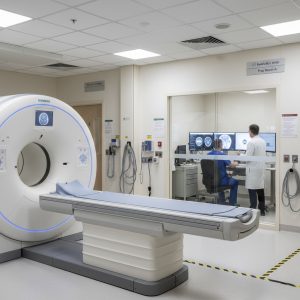


Medical device classification determines how a piece of equipment is regulated, how often it needs maintenance, and how much risk it poses to patients if it fails. For hospitals and clinics, getting this right is the foundation of a compliant, well-run equipment management program. This guide covers the FDA’s regulatory device classes, the risk-based classification system hospitals use internally to prioritize maintenance, and the practical steps for classifying equipment correctly in your own facility.
What Is Medical Device Classification?
Medical device classification is the process of sorting equipment into categories based on regulatory risk and clinical function. Two systems operate side by side in most healthcare facilities. The first is the FDA’s Class I, II, and III framework, which governs how a device is regulated before it reaches the market. The second is a risk-based classification hospitals build internally to schedule preventive maintenance and prioritize service calls.
Facilities teams often assume the FDA class alone tells them how critical a device is to maintain. It does not. FDA classification reflects premarket regulatory risk, not day-to-day clinical risk inside a hospital. A biomedical equipment classification system that accounts for both is what actually protects patients and keeps a facility survey-ready.
Understanding FDA Device Classes I, II, and III
FDA device classification places every medical device into one of three classes based on the level of control needed to ensure it is safe and effective.
Class I devices carry the lowest risk. Examples include bandages, exam gloves, and handheld surgical instruments. These typically require only general controls, such as good manufacturing practices, and most are exempt from premarket review.
Class II devices carry moderate risk and usually need special controls in addition to general controls. This is where most hospital equipment lives, including infusion pumps, patient monitors, and powered wheelchairs. Most Class II devices go through the FDA’s 510(k) premarket notification process.
Class III devices carry the highest risk, often because they are life-sustaining, life-supporting, or implanted. Ventilators used for life support and implantable defibrillators fall into this category. These require premarket approval, the FDA’s most rigorous review pathway.
| FDA Class | Risk Level | Typical Examples | Regulatory Pathway |
| Class I | Low | Bandages, exam gloves, manual surgical tools | General controls, often exempt |
| Class II | Moderate | Infusion pumps, patient monitors, powered wheelchairs | 510(k) premarket notification |
| Class III | High | Ventilators (life support), implantable defibrillators | Premarket approval (PMA) |
Knowing the FDA class of a device is useful context, but it was never designed to tell a hospital how often that device needs to be serviced. That is where a second layer of classification comes in.
Why Hospitals Also Need Risk-Based Equipment Classification
FDA class is a manufacturing and premarket concept. Medical equipment risk classification is a maintenance concept, and hospitals need both to run a defensible equipment management program. A hospital equipment risk classification system typically scores each device on factors like its clinical function, physical risk if it fails, and its maintenance requirements and history.
This is the layer that actually drives preventive maintenance intervals, spare parts planning, and technician response priority. Two Class II devices, for example, can carry very different internal risk scores. An infusion pump used in an ICU and a powered wheelchair used for patient transport are both Class II, but one demands a far tighter PM schedule and faster response time than the other.
Skipping this step has real consequences. Facilities that rely on FDA class alone often over-maintain low-risk devices while under-maintaining higher-risk ones, wasting technician hours in one area while leaving genuine safety gaps in another. A well-built risk classification system directs limited maintenance resources to where they matter most, rather than spreading them evenly across equipment that carries very different levels of risk.
Building this out well requires ongoing biomedical equipment management, not a one-time exercise. As equipment ages, gets replaced, or is redeployed to different departments, its risk score should be revisited so the maintenance program stays accurate.
How to Classify Medical Equipment in Your Facility
Classifying medical equipment correctly takes a consistent process, not a one-off spreadsheet exercise. Learning how to classify medical devices in a repeatable way is what separates a program that holds up at survey from one that only looks good on paper. Here is a practical five-step approach.
- Build a complete equipment inventory. Every device your facility owns or leases needs to be logged, including make, model, department, and FDA class where known. Gaps in the inventory create blind spots in the entire program.
- Confirm each device’s FDA class. Manufacturer documentation, FDA databases, and product labeling will confirm whether a device is Class I, II, or III. This step establishes the regulatory baseline.
- Score each device for clinical and physical risk. Rate factors such as the device’s function (life-supporting, surgical, diagnostic, or general), the consequence of failure, and any history of recalls or repeat repairs. Many programs use a simple numeric scale so scores stay consistent across departments and reviewers.
- Assign a maintenance priority and PM interval. Combine the FDA class with the risk score to set an appropriate preventive maintenance schedule, ranging from monthly checks on high-risk devices to annual reviews on low-risk ones.
- Document and review on a set cycle. Classification is not permanent. Review it annually, or any time a device is replaced, recalled, or moved to a different clinical setting.
Facilities without the internal bandwidth to run this process consistently often bring in outside support. enBio’s biomedical equipment consulting services help hospitals build or refine a biomedical equipment classification system that holds up to survey scrutiny.
Common Medical Device Classification Mistakes to Avoid
Even hospitals with a formal program run into avoidable errors. Watching for these mistakes keeps a medical device classification system accurate and defensible over time.
- Treating FDA class as the only input. FDA classification reflects a device’s premarket regulatory category. On its own, it says nothing about how much day-to-day clinical risk that device carries inside your facility.
- Classifying equipment once and never revisiting it. A device’s risk profile changes as it ages, gets redeployed to a different department, or accumulates a repair history. A static classification quickly becomes an inaccurate one.
- Skipping documentation of the methodology. Surveyors do not just want a completed inventory. They want to see how each risk score was determined and applied consistently across similar devices.
- Letting maintenance records drift from classification. If PM intervals no longer match the assigned risk category, the classification exercise has lost its practical value and needs to be realigned.
How Classification Supports Joint Commission and CMS Compliance
Joint Commission medical equipment classification is not just good practice, it is an expectation. The Joint Commission’s Environment of Care standards call for a documented, risk-based approach to managing the medical equipment inventory, and CMS Conditions of Participation reinforce the same requirement for facilities that bill Medicare and Medicaid.
Surveyors want to see more than a list of equipment. They want evidence that medical device risk categories were assigned using a defined methodology, that PM schedules match those categories, and that completion rates are tracked and reported. A facility that cannot explain why one device is serviced quarterly and another annually is exposed during a survey.
Getting this documentation right is part of why many hospitals pair their internal classification work with outside compliance support. A defensible medical device classification program gives surveyors exactly what they are looking for: a clear methodology, consistent application, and records to back it up. enBio’s CMS and Joint Commission compliance support helps facilities keep classification records audit-ready year round.
Frequently Asked Questions
What Are the Three Classes of Medical Devices?
The three FDA device classes are Class I, II, and III. Class I covers low-risk devices like bandages and manual instruments. Class II covers moderate-risk devices like infusion pumps and patient monitors. Class III covers high-risk, life-sustaining, or implanted devices like ventilators and implantable defibrillators.
What Is the Difference Between FDA Classification and Hospital Risk Classification?
FDA classification is a premarket regulatory category assigned by the manufacturer and confirmed by the FDA before a device reaches the market. Hospital risk classification is an internal scoring system facilities use to set maintenance priority, PM intervals, and technician response time based on clinical function and failure consequence.
How Often Should Classified Medical Equipment Be Inspected?
Inspection frequency depends on a device’s risk classification, not its FDA class alone. High-risk, life-supporting equipment is typically inspected monthly or quarterly, while lower-risk devices may only need annual review. The exact interval should come from your facility’s documented risk-based maintenance program.
Who Is Responsible for Medical Device Classification in a Hospital?
Biomedical engineering or clinical engineering staff typically own medical device classification, often working alongside facilities and compliance teams. Many hospitals also bring in outside biomedical equipment management partners to build the classification system and keep it current as equipment changes.
Classifying your equipment correctly is the first step toward a maintenance program that protects patients and holds up under survey. If your facility needs help building or auditing your classification system, contact enBio’s field biomedical management team to get started.