



A ventilator, defibrillator, or anesthesia machine that fails during use puts patients and staff at risk. A gap in the maintenance record can lead to a survey finding even when the work was done. That is why Joint Commission high-risk medical equipment requirements matter to clinical engineering, facilities, and compliance teams.
This guide explains what the Joint Commission expects for high-risk medical equipment, how the requirements differ for hospitals and clinics, and how to keep your records survey ready.
Joint Commission High-Risk Equipment Requirements at a Glance
These Joint Commission medical equipment standards come down to five expectations. Exact wording depends on your program and manual edition, so treat this as a working summary.
- Inventory. Keep a written inventory that identifies your high-risk equipment, including all life-support equipment.
- Pre-use checks. Perform safety, operational, and functional checks before equipment goes into use.
- High-risk maintenance. Inspect, test, and maintain high-risk equipment on defined frequencies, with complete records.
- Other equipment. Inspect, test, and maintain non-high-risk equipment on the inventory as well.
- Equipment-specific testing. Meet the performance testing expectations for specific devices, such as sterilizers.
What Counts as High-Risk Medical Equipment
Understanding how high-risk medical equipment is defined and classified is essential for maintaining regulatory compliance and patient safety. Below, we break down the official Joint Commission definitions and outline how healthcare organizations establish their own risk criteria.
The Joint Commission definition
The Joint Commission describes high-risk equipment as medical equipment that could cause serious injury or death to a patient or staff member if it fails. Life-support equipment is included.
Who decides which devices are high-risk
Your organization does. The Joint Commission expects you to categorize equipment using the physical risk of its use and its incident history, and to document the criteria you applied.
Many hospitals and clinics place devices such as ventilators, anesthesia machines, infusion pumps and defibrillators, and sterilizers in this group. The list belongs to each organization, and it should follow your own written criteria, not a generic list.
What the Joint Commission Expects for High-Risk Medical Equipment
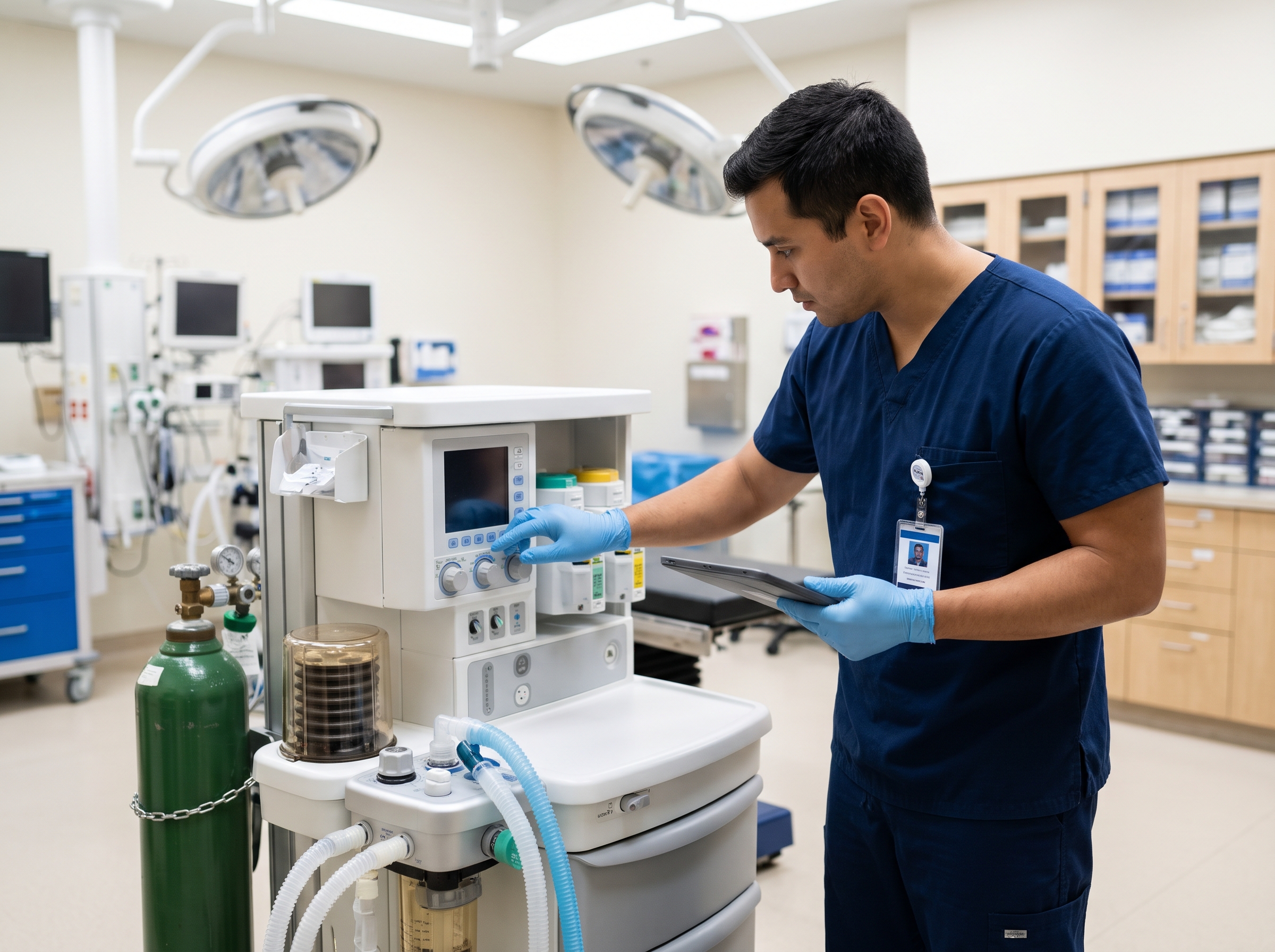
Whether you run a hospital or a clinic, the expectations follow the same logic: know what you have, decide how risky it is, maintain it on a defined schedule, and prove it.
A current medical equipment inventory
Your written medical equipment inventory must identify which equipment is high-risk. New equipment types should be evaluated before first use to decide whether they belong on the inventory. Before initial use, the organization performs safety, operational, and functional checks.
An inventory that does not match the equipment on the floor is one of the quickest ways to create a documentation problem. For clinics with a small device count, the medical equipment inventory is often the easiest place to start. For multi-site health systems, the challenge is keeping every location’s medical equipment inventory consistent.
Risk criteria and maintenance frequencies
Frequencies for inspecting, testing, and maintaining equipment should be set using criteria such as manufacturer recommendations, risk level, or the organization’s own experience. Write the criteria down. A reviewer should be able to see why a device sits on a 6-month schedule and not an annual one.
Complete preventive maintenance and testing
The Joint Commission’s long-standing language for high-risk equipment calls for a 100% completion rate on required inspection, testing, and maintenance activities. A schedule alone does not meet that expectation. You need completed work, and a record that shows it.
Documentation that stands on its own
Each record should show what was done, when it was done, who did it, and the result. Corrective actions for failed checks should be traceable from finding to repair to return to service. Strong documentation is the evidence of the technical work, not a substitute for it.
Alternative equipment maintenance (AEM)
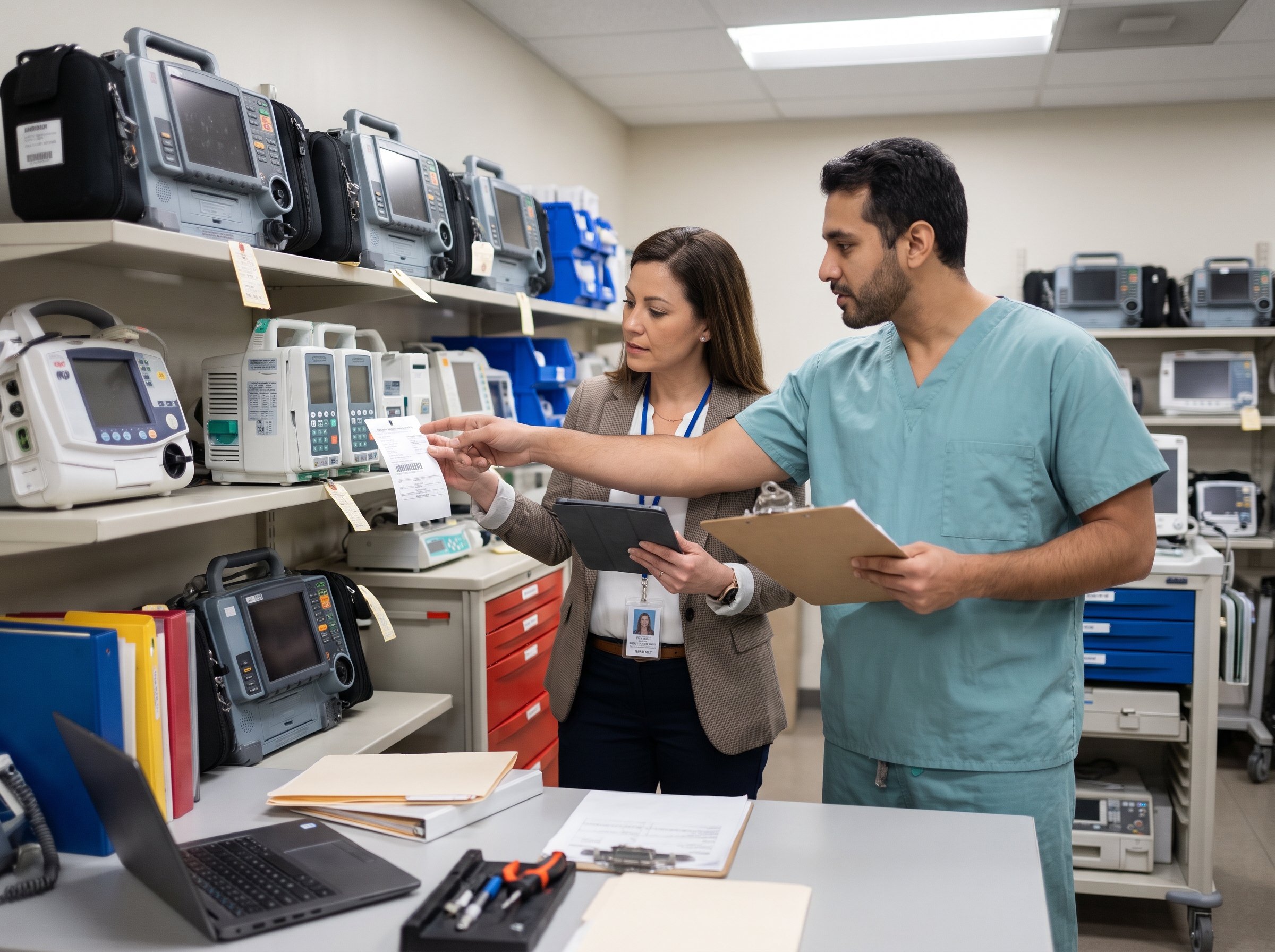
An alternative equipment maintenance program lets an organization use a maintenance approach that differs from the manufacturer’s schedule for eligible equipment. CMS allows it, but the rationale must be documented, and some equipment categories are excluded. Check the current CMS guidance before placing any device on an AEM schedule. This documented rationale matters most for high-risk equipment.
Joint Commission High-Risk Medical Equipment Requirements: Hospitals vs. Clinics
The biggest change for hospitals is structural. Joint Commission’s Accreditation 360 took effect on January 1, 2026, for hospitals and critical access hospitals. Environment of Care (EC) and Life Safety requirements moved into a new Physical Environment (PE) chapter, and the old standard numbers changed.
For Joint Commission medical equipment standards, the earlier high-risk elements under EC.02.04.01 and EC.02.04.03 were consolidated into PE.04.01.01, which requires the hospital to maintain essential equipment in safe operating condition. The Joint Commission’s change log ties this to CMS Condition of Participation 42 CFR 482.41(d)(2).
Clinics and other ambulatory programs were not part of that restructure at the time of writing. They continue to work from the EC chapter.
| Topic | Hospitals and critical access hospitals | Clinics and ambulatory care |
|---|---|---|
| Chapter | Physical Environment (PE), from January 1, 2026 | Environment of Care (EC) |
| Equipment standards | PE.04.01.01 and CMS CoP 482.41(d)(2) | EC.02.04.01 and EC.02.04.03 |
| High-risk focus | Essential equipment kept in safe operating condition | High-risk equipment identified and maintained (EC.02.04.01 EP 3, EC.02.04.03 EP 2) |
| Your action | Confirm wording in your current hospital manual | Confirm wording in your current ambulatory manual |
Older guidance is still easy to find online, including articles written before 2026. If a source cites EC numbers for a hospital, check its date. Standard numbers and element wording also change between manual editions, so verify against the manual your organization is surveyed under before you update policies.
Hospitals and clinics both carry the same practical burden. Surveyors, whether for the Joint Commission or CMS, want to see that high-risk medical equipment is known, classified, maintained, and documented. Changing chapter numbers does not change that.
A complete inventory, documented risk criteria, finished maintenance, and records that prove it will support your program whichever chapter it falls under.
Common Documentation Gaps on High-Risk Equipment
These gaps tend to show up when teams prepare for a survey:
- The inventory and the devices on the floor do not match.
- High-risk classification exists in practice but is not written down.
- A PM schedule exists, but completion records are missing or incomplete.
- Work done by outside vendors is not reconciled back into the inventory.
- New devices enter service without a documented pre-use check.
- An AEM rationale was never recorded.
How to Keep High-Risk Medical Equipment Survey Ready
- Reconcile the inventory. Walk the floor and compare it to the written inventory. Add, retire, and correct entries.
- Document your risk criteria. Keep one page that explains how a device is classified as high-risk.
- Match schedules to criteria. Confirm each high-risk device has a defined frequency and a reason for it.
- Track completion, not just scheduling. Review PM completion for high-risk devices monthly and chase anything overdue.
- Close the loop on failures. Link every failed check to a repair record and a return-to-service entry.
- Review AEM decisions. Confirm each device on an AEM schedule has a written basis and is eligible.
- Keep records retrievable. Records should be available quickly when a surveyor asks.
A checklist like this also gives leadership a simple way to review progress each quarter. Teams that run regular field biomedical PM and calibration work through a single documented process find these steps easier to sustain.
How enBio Supports High-Risk Equipment Programs
enBio is a Healthcare Technology Management (HTM) company that supports hospitals and clinics with multi-state field coverage. enBio is a member of AAMI and CMIA.
enBio ComplianceConnect supports equipment-related compliance with documentation review, gap assessments, corrective action planning, and mock survey support, aligned to Joint Commission and CMS requirements. Our biomedical equipment management services provide on-site and depot support, including inventory management and preventive maintenance. enBio provides service records, PM completion reports, and equipment performance data that your team can use in internal reviews and accreditation surveys.
enBio services equipment and supports compliance. We do not advise on patient care.
Want a second set of eyes on your high-risk equipment program? Contact us to review your inventory, PM completion, and documentation so you are survey ready.
Frequently Asked Questions
What are the safety standards for medical devices?
Several sources work together. Joint Commission medical equipment standards, CMS Conditions of Participation, NFPA 99 for electrical and life-safety equipment, applicable FDA device regulations, and manufacturer recommendations all apply. Your equipment management program ties them together.
What counts as high-risk medical equipment?
Under Joint Commission high-risk medical equipment rules, high-risk equipment is medical equipment whose failure could cause serious injury or death to a patient or staff member, including life-support equipment. Each organization decides which devices qualify using documented risk criteria.
Does the Joint Commission require 100% PM completion on high-risk equipment?
Long-standing Joint Commission language calls for a 100% completion rate on required activities for high-risk equipment. Hospitals should confirm how this reads under the 2026 Physical Environment chapter and CMS 482.41(d)(2). Plan for full completion and keep proof of it either way.
What is an alternative equipment maintenance (AEM) program?
An AEM program lets an organization use a maintenance strategy that differs from the manufacturer’s schedule for eligible equipment. The basis must be documented, and certain equipment categories are excluded under CMS guidance.
What documentation should be ready for a survey?
Keep the written equipment inventory, risk criteria, maintenance frequencies, completed PM and testing records, corrective action records, and any AEM rationale. Records should show what was done, when, by whom, and the result.
Do clinics follow the same requirements as hospitals?
The expectations are similar, but the standards sit in different places. Hospitals moved to the Physical Environment chapter on January 1, 2026. Clinics and ambulatory programs continue to use Environment of Care standards. Confirm against your current manual.
What happens if a hospital does not meet Joint Commission standards?
Survey findings must be addressed. The organization submits evidence of the corrective actions it took, called Evidence of Standards Compliance (ESC), and Joint Commission staff review it. Outcomes depend on the survey results and follow-up, so closing documentation gaps before a survey is the lower-risk path.
Is Joint Commission accreditation required, and how often are surveys?
Accreditation is voluntary, although many hospitals use it to show they meet CMS requirements. Surveys happen on a recurring cycle and are generally unannounced, so keep records current all year. Check your accreditation documents for your own timeline.
Can a third-party biomedical provider handle PM on high-risk equipment?
Yes. Many organizations use qualified third-party biomedical providers. Your organization still owns the program, so vendor records must flow back into your inventory and files.