

The disposal of medical equipment is the last stage of every device’s lifecycle, and it carries as much risk as the first. A retired infusion pump can still hold patient data. A monitor can carry contamination. A battery pack can fall under hazardous waste rules.
A device that leaves the building without being removed from the inventory can also create gaps during a Joint Commission survey.
This guide walks clinical engineering, facilities, procurement, and compliance teams through the regulations, steps, and sustainable options for retiring equipment responsibly.
Why Proper Disposal of Medical Equipment Matters
Proper disposal of medical equipment protects four things at once: people, patient data, the environment, and your compliance record.
- Staff and handler safety. Devices used in patient care can carry blood, body fluids, or chemical residue. Without decontamination, they put environmental services staff, haulers, and recyclers at risk.
- Patient privacy. Patient monitors, infusion pumps, ventilators, ultrasound systems, and imaging equipment often store patient names, IDs, or clinical data. That information leaves with the device unless someone removes it.
- Environmental impact. Medical electronics contain batteries, circuit boards, lead, and in some older devices, mercury. Sending them to a landfill releases these materials into soil and water.
- Audit readiness. Surveyors compare your equipment inventory to what is actually in use. Retired devices still listed as active, or devices missing without a record, raise questions about your whole program.
Regulations That Shape Medical Device Disposal
Medical device disposal falls under several overlapping rules. Your facility is responsible for knowing which ones apply to each device.
Federal Environmental Rules
The Resource Conservation and Recovery Act (RCRA) governs hazardous waste, which can include components inside medical equipment. EPA universal waste rules cover common items such as batteries, mercury-containing equipment, and lamps, and allow simpler handling when they are managed correctly. The FDA also provides guidance on the disposal of contaminated devices.
State Medical Waste and E-Waste Rules
Each state sets its own rules for regulated medical waste and electronic waste, and many are stricter than federal standards. Check with your state health department or environmental agency before choosing a disposal path. Health systems with facilities in more than one state may need a different process for each location.
HIPAA and Patient Data on Devices
The HIPAA Security Rule requires covered entities to have policies for the final disposal of electronic protected health information (ePHI) and the hardware that stores it. Medical devices that hold patient data are part of that hardware.
Joint Commission and CMS Documentation
Joint Commission environment of care standards and CMS Conditions of Participation expect an accurate medical equipment inventory. Retirement records show surveyors that removed equipment was handled on purpose, not lost.
How Hospitals Retire and Dispose of Medical Equipment, Step by Step
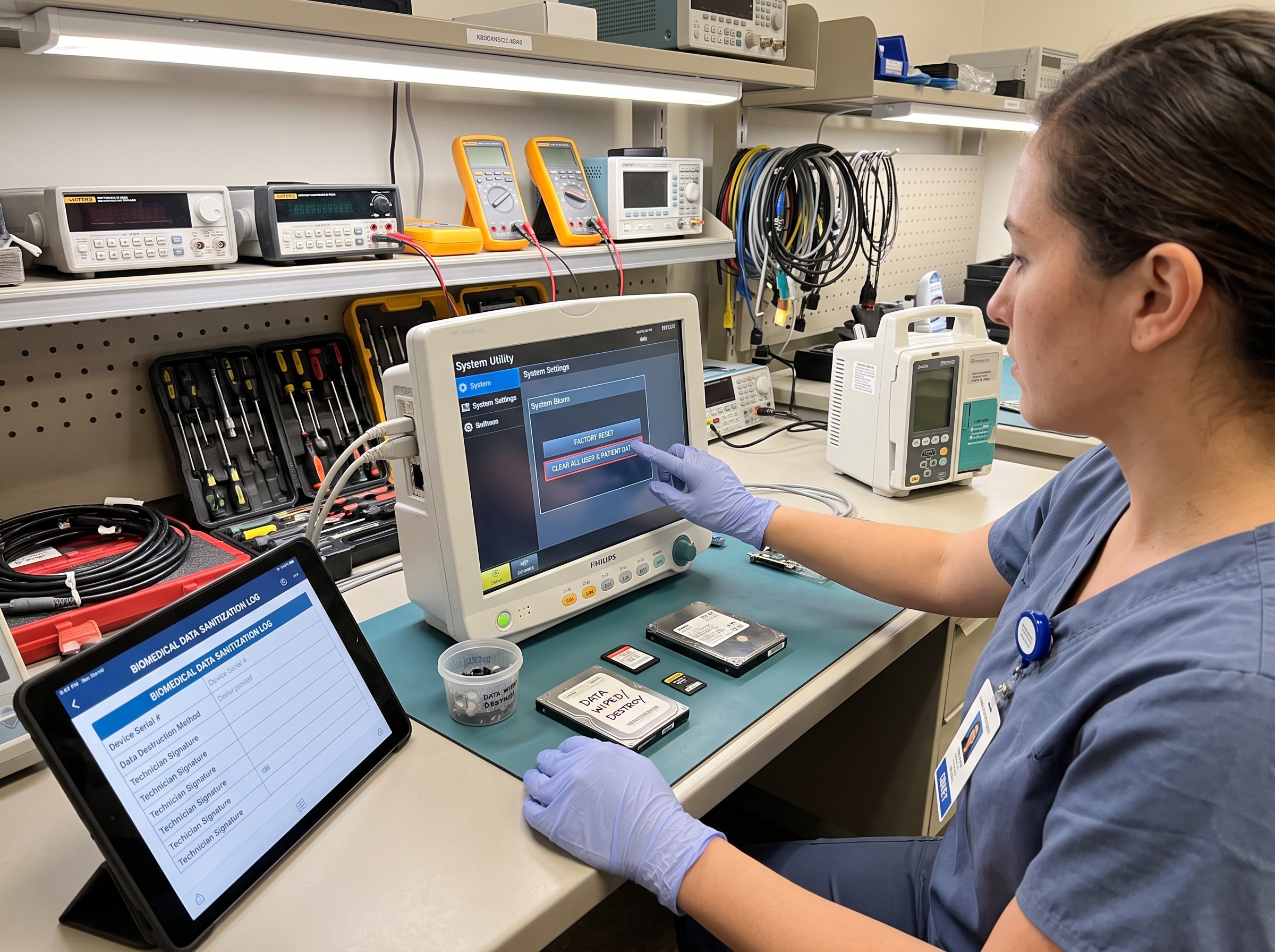
A clear, repeatable process keeps every retired device safe, documented, and traceable. Most hospitals follow these seven steps.
1. Decide Whether to Repair or Retire
Start with a BMET evaluation. Review repair history, PM results, parts availability, and whether the manufacturer still supports the model. If repair costs keep rising or the OEM has ended support, retirement is usually the better choice. A biomedical equipment repair assessment gives you the data to decide.
2. Remove the Device From Service and Update the Inventory
Tag the device as out of service and move it to a secure holding area so it cannot return to patient care. Update its status in your CMMS or asset management system with the retirement date and reason.
3. Decontaminate and Document
Clean and disinfect the device following the manufacturer’s instructions and your infection prevention policy. Record who did the work, when, and how. Recyclers and donation programs often ask for this record.
4. Remove Patient Data and Settings
Run the manufacturer’s data clearing process or a factory reset. Remove or destroy any storage media, such as hard drives or memory cards, that cannot be wiped. Document the method used for each device.
5. Separate Hazardous Components
Remove batteries, gas cylinders, and any mercury-containing parts. Route them through your hazardous or universal waste stream, not with the device.
6. Choose the End-of-Life Path
Decide whether the device will be refurbished, donated, returned to the manufacturer, recycled, or sent for regulated disposal. The next section covers each option.
7. Keep Certificates of Disposal, Destruction, or Donation
Ask every vendor or partner for a certificate that lists the device, serial number, and date. File it with the asset record and close out the device in your inventory. This record completes the device lifecycle within your medical equipment management program.
Sustainable Options for Medical Equipment Disposal
A landfill should be the last stop, not the first. These options keep usable equipment and materials in circulation.
Refurbish or Resell
Working equipment with remaining service life can go to refurbishers or secondary-market buyers. This recovers part of the original investment and extends the device’s use.
Donate
Organizations such as MedShare accept medical equipment for facilities in underserved areas. Most programs only take functional, clean equipment with documentation, so check their acceptance criteria first.
Manufacturer Take-Back and Trade-In Programs
Many manufacturers take back old equipment when you buy a replacement. Ask about take-back terms during the medical equipment purchasing process, not after the new device arrives.
Certified Electronics Recycling
For devices that cannot be reused, choose a recycler certified to R2 or e-Stewards standards. Certified recyclers follow set practices for data security and material recovery, and they provide certificates of recycling.
Regulated Disposal
Contaminated items and components that cannot be recovered go to a licensed medical or hazardous waste provider. Keep the waste manifests with your disposal records.
The Use and Importance of Medical Waste Disposal Equipment
Retiring devices is only part of the picture. The use of medical waste disposal equipment is part of daily operations in every hospital, and how well it performs affects both safety and compliance.
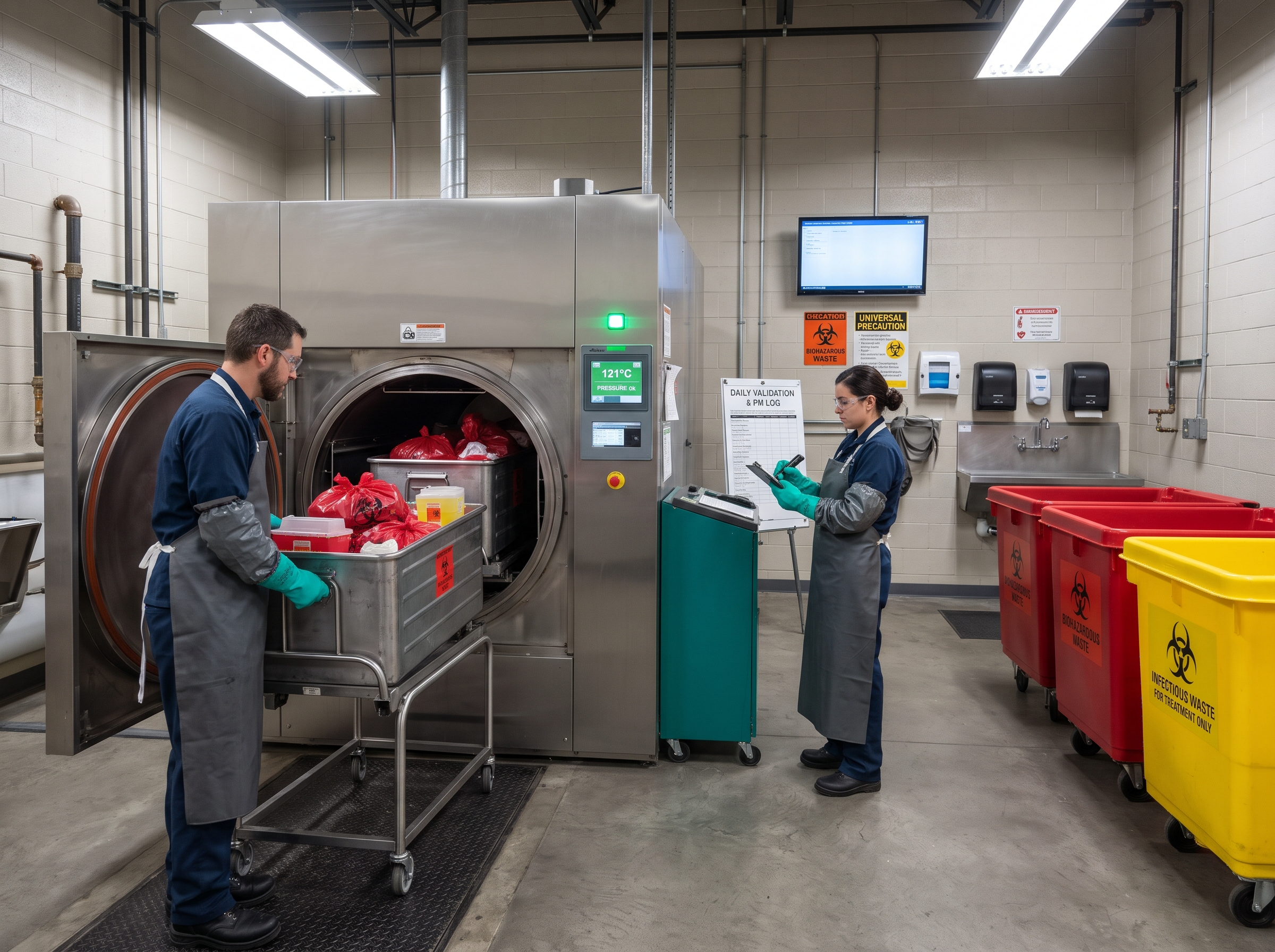
Common Types of Medical Waste Disposal Equipment
- Sharps containers that safely hold needles and blades until collection
- On-site waste autoclaves that treat infectious waste with steam before it leaves the facility
- Shredder-sterilizer systems that treat waste and reduce its volume in one process
- Compactors and waste carts used to contain and move waste safely
Why Maintenance and Validation Matter
The importance of medical waste disposal equipment comes down to one thing: it has to work every cycle. A treatment unit that does not reach the right temperature or pressure can release untreated waste. Regular PM, testing, and documented validation show the equipment is doing its job and help prevent unplanned downtime.
The same principle applies to the sterilizers that process surgical instruments. They also depend on routine PM and testing to stay reliable. Learn more about sterilizer and autoclave servicing.
Common Disposal Mistakes to Avoid
Most disposal problems come from skipped steps, not bad intentions. Watch for these:
- Leaving retired devices listed as active in the equipment inventory
- Sending devices out without wiping patient data
- Skipping the decontamination record
- Donating equipment that does not work or lacks documentation
- Using recyclers without R2 or e-Stewards certification
- Losing the certificate of disposal, which leaves no proof of where the device went
How enBio Supports End-of-Life Equipment Decisions
Responsible disposal starts with good lifecycle data. enBio gives hospitals and clinics the information and records they need to retire equipment with confidence:
- Repair-vs-retire input based on PM results and repair history
- Asset tracking and inventory management through field biomedical services, including end-of-life planning
- Audit-ready documentation for Joint Commission and CMS through ComplianceConnect
With multi-state field coverage, enBio helps keep your equipment inventory accurate from installation to retirement. Talk to our team about your equipment lifecycle program.
Frequently Asked Questions
How do hospitals properly dispose of medical equipment?
They remove the device from service, update the inventory, decontaminate it, wipe patient data, and separate hazardous parts. The device then goes to a reuse, donation, take-back, certified recycling, or regulated disposal path, and the hospital keeps the certificate.
Do you need to remove patient data from medical devices before disposal?
Yes. Many devices store ePHI, and HIPAA requires policies for its final disposal. Clear or destroy the data and document the method before the device leaves the facility.
Can medical equipment be recycled or donated?
Yes. Functional, clean equipment can be resold, refurbished, or donated to organizations like MedShare. Equipment that cannot be reused should go to an R2 or e-Stewards certified recycler.
Who is responsible for medical device disposal in a hospital?
Clinical engineering usually leads the process, working with facilities, infection prevention, IT, and compliance. When equipment management is outsourced, the service partner often supports the repair-vs-retire decision and the documentation.