

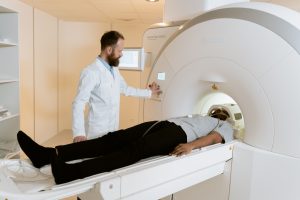
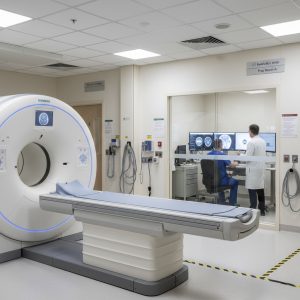
Every piece of medical equipment in a hospital has a story. It starts with a need, moves through selection and procurement, gets installed, serves patients for years, and eventually reaches the point where it must be retired. Medical device lifecycle management is the discipline that oversees that entire journey, and it matters more than most healthcare leaders realize. When lifecycle management is done well, equipment stays reliable, budgets stay predictable, and patient care stays uninterrupted. When it falls apart, hospitals end up in reactive mode, scrambling to replace a failed MRI scanner at nearly five times the planned cost.
This article walks through each stage of that journey. Whether you are a biomedical engineer, a facility director, or a CFO trying to make sense of capital equipment spending, understanding these stages is the first step toward a smarter, more proactive approach to managing your medical devices. For organizations that rely on hospital biomedical management services, a clear lifecycle framework is the foundation everything else is built on.
What Is Medical Device Lifecycle Management?
Medical device lifecycle management is a structured approach to tracking, maintaining, and planning for every device in a healthcare facility, from the day it is purchased through the day it is decommissioned. It answers three fundamental questions: What do we own? What condition is it in? When does it need to be replaced?
Without a formal lifecycle framework, hospitals tend to manage capital equipment reactively. Devices get replaced after they fail, not before. The result is unplanned emergency spending, clinical disruption, and compliance exposure when aging equipment breaks down during an active patient episode or a regulatory survey.
A strong approach to medical device lifecycle management replaces that cycle with data. It gives biomedical teams the condition scores, repair histories, and cost accumulation records they need to make defensible replacement recommendations, and it gives finance teams the forecasts they need to plan capital budgets without surprises.
Why Healthcare Facilities Need a Lifecycle Approach
Healthcare equipment is expensive, and the purchase price is just the beginning. Maintenance contracts, parts, labor, software updates, calibration, and eventual disposal all add to the total cost of ownership. A single ventilator or imaging system can cost tens of thousands of dollars to maintain over a 10-year service life. Even lower-cost assets add up quickly when managed at scale, which is why many hospitals implement a structured hospital bed PM and management program alongside their high-value capital equipment schedules.
Facilities that manage this without a lifecycle plan tend to over-maintain aging equipment (pouring money into devices that should have been replaced years ago) or under-maintain newer equipment (skipping scheduled service because the device “seems fine”). Both habits are costly. The lifecycle approach gives every device a clear trajectory with defined milestones, so decisions about maintenance, upgrade, or replacement happen at the right time rather than in a crisis.
Who Is Involved in the Lifecycle Process
Lifecycle management is not the job of one department. Clinical engineering and biomedical technicians handle day-to-day maintenance, condition assessments, and safety inspections. Procurement teams manage vendor relationships, contract negotiations, and purchasing timelines. Finance and capital planning teams set budgets, approve replacements, and track depreciation. Some facilities also bring in outside expertise through biomedical equipment consulting to help evaluate fleet condition, optimize maintenance contracts, or plan capital replacement cycles.
Clinical staff also play a role, even though they are rarely thought of as part of the lifecycle process. Nurses, technicians, and physicians are the people who use the equipment every shift, and their feedback on device performance, reliability, and usability is one of the earliest signals that a piece of equipment is approaching the end of its useful life. The best lifecycle programs build channels for that feedback to reach the people who make replacement decisions.
The Medical Device Development Life Cycle: From Concept to Clinical Use
Before a device ever arrives at a hospital loading dock, it goes through its own medical device development life cycle. This is the manufacturer’s side of the story: the research, design, prototyping, testing, and regulatory clearance process that turns an idea into a market-ready product.
For healthcare buyers, understanding this phase matters for two practical reasons. First, it helps procurement teams evaluate where a device sits in its commercial life cycle. A product that just received FDA clearance last year has a long runway of manufacturer support ahead of it. A product that launched eight years ago and has already been replaced by a newer model may face parts shortages and end-of-support announcements sooner than expected.
Second, the medical device development life cycle shapes the documentation, training resources, and service infrastructure that come with a purchase. Devices from manufacturers with mature development and post-market surveillance programs tend to come with better service manuals, more accessible replacement parts, and longer windows of guaranteed technical support.
Procurement teams that understand the development life cycle are also better positioned to ask the right questions during vendor evaluation: How long has this model been on the market? What is the planned end-of-support date? Are firmware updates included in the service contract? These questions directly affect how well a device will perform over its full operational life inside the hospital.

The Medical Device Product Life Cycle in a Healthcare Setting
Once a device is purchased and delivered, it enters the medical device product life cycle as experienced by the healthcare facility. This is where the operational stages begin, and where the quality of lifecycle management has the most direct impact on patient care and financial performance.
The product life cycle inside a hospital or clinic can be broken into three broad phases: deployment, operation, and retirement. Each phase has its own set of tasks, risks, and decision points. The sections below walk through the deployment phase in detail.
Installation, Commissioning, and Acceptance Testing
Deployment starts with physical installation, but that is only the first step. Commissioning is the process of verifying that the device operates within manufacturer specifications in its installed environment. This includes confirming proper electrical connections, network integration (for connected devices), and safety checks. Biomedical equipment calibration is a critical part of this phase, ensuring that measurement outputs and performance parameters meet the standards required for clinical use.
Acceptance testing goes one step further. It confirms that the device meets the performance benchmarks defined during procurement. If a contract specifies that an imaging system must achieve a certain resolution, dose accuracy, or throughput rate, acceptance testing is where those numbers get verified. Skipping or rushing this step is one of the most common early mistakes in equipment management, because undetected issues at installation compound into expensive problems later.
Staff Training and Clinical Integration
A perfectly installed device is useless if the people who operate it are not properly trained. Clinical integration goes beyond a one-time orientation session. It includes hands-on training for all shifts, written protocols for daily operation and troubleshooting, and a clear escalation path for reporting malfunctions or performance concerns. This applies to everything from complex imaging equipment to a surgical table and lighting system in an operating room, where improper use can compromise both device longevity and patient safety.
Training also has a direct effect on equipment lifespan. Devices that are used incorrectly, even in minor ways, tend to degrade faster and require more frequent corrective maintenance. Hospitals that invest in thorough initial training and periodic refresher sessions consistently see lower repair costs and fewer unplanned service calls over the life of the equipment.
What Good Performance Looks Like at Go-Live
The go-live period is the facility’s first real opportunity to establish a performance baseline. This baseline becomes the reference point for every future maintenance decision, condition assessment, and replacement justification. Good performance at go-live means the device meets or exceeds its specification targets, staff can operate it confidently, and the asset record in the facility’s management system is complete with purchase date, warranty terms, and the first product life cycle milestone logged.
Facilities that document this baseline rigorously are the ones that can later demonstrate, with data rather than opinion, when a device has degraded enough to warrant replacement. Facilities that skip this step are left relying on anecdotal reports and gut feelings, which rarely survive a budget meeting.
How to Maintain and Monitor Performance Across the Healthcare Device Lifecycle
The operational phase is the longest stage of the healthcare device lifecycle, and it is where the most money is spent. Maintenance and monitoring during this phase determine how long a device remains safe, effective, and cost-justified.
Preventive vs. Corrective Maintenance: Which Approach Works Best
Corrective maintenance means fixing a device after it breaks. Preventive maintenance means servicing a device on a schedule to reduce the likelihood of failure. In practice, every healthcare facility uses both, but the ratio matters enormously.
Facilities that lean heavily on corrective maintenance operate in a constant state of reaction. Every broken device becomes an urgent situation, and the cost per incident is significantly higher because emergency repairs require expedited parts, overtime labor, and sometimes loaner equipment to fill the gap. Preventive maintenance costs more upfront in scheduled labor and parts, but it reduces unplanned downtime, extends equipment life, and produces predictable service costs that finance teams can budget for. Specialty devices are particularly sensitive to this distinction. Routine endoscopy system maintenance, for example, prevents image degradation and scope damage that would otherwise require costly emergency repair or replacement.
The most effective strategy across the healthcare device lifecycle is a blended approach: preventive maintenance as the foundation, with corrective maintenance reserved for truly unpredictable failures. The key is to base PM schedules on manufacturer recommendations, regulatory requirements, and actual device condition data rather than arbitrary calendar intervals.
Condition Monitoring and Predictive Analytics in Practice
Condition monitoring takes maintenance a step further by continuously tracking device performance indicators: output accuracy, error frequency, vibration patterns, power consumption, and other signals that can reveal degradation before a clinical failure occurs.
Predictive analytics layers data science on top of condition monitoring. By analyzing historical repair data, usage patterns, and condition trends across a fleet of similar devices, predictive models can estimate when a specific device is likely to fail or fall below acceptable performance thresholds. This is not theoretical. Hospitals that use predictive analytics for high-value imaging and life-support equipment have demonstrated measurable reductions in unplanned downtime and emergency repair costs. In critical care departments, proactive ventilator machine maintenance driven by condition data has proven especially valuable in preventing failures that directly threaten patient safety.
Regulatory Compliance and Safety Inspections You Cannot Skip
Regulatory compliance is not optional, and it is not separate from lifecycle management. It is embedded in it. Joint Commission standards, CMS Conditions of Participation, and OSHA requirements all specify expectations for how device lifecycle activities must be documented and executed.
Safety inspections, electrical safety testing, and performance verification must happen on defined schedules. The records from these inspections must be complete, accessible, and audit-ready. Every biomedical equipment repair event, inspection result, and corrective action must be documented in a way that survives regulatory scrutiny. Facilities that treat compliance as a separate administrative task rather than an integrated part of their lifecycle program inevitably end up scrambling before surveys, pulling records from multiple disconnected systems and hoping nothing was missed.
Medical Device Product Lifecycle Management: How to Maximize Useful Life
Medical device product lifecycle management is not just about keeping equipment running. It is about extracting the maximum safe, effective service from every device while keeping total costs under control. This stage of the lifecycle is where the most nuanced decisions happen.
Total Cost of Ownership and What It Means for Your Budget
Total cost of ownership (TCO) includes every dollar spent on a device from acquisition to disposal: purchase price, installation, training, maintenance contracts, parts, labor, software licenses, and end-of-life disposal costs. For high-value devices like MRI systems, CT scanners, and surgical robots, maintenance and operational costs often exceed the original purchase price over a 10- to 15-year service life. Even mid-range devices such as infusion pumps and defibrillators carry meaningful ongoing costs when managed across a large fleet.
Effective medical device product lifecycle management tracks TCO at the individual device level. This makes it possible to compare the actual cost of maintaining an aging device against the projected cost of a replacement, giving decision-makers a clear financial picture rather than a vague sense that something is “getting old.”
Software Updates, Upgrades, and Refurbishment Options
Not every aging device needs to be replaced. Software updates can restore compliance, add functionality, and address security vulnerabilities. Hardware upgrades, such as replacing a detector panel on an imaging system, can extend useful life by several years at a fraction of the cost of a full replacement. In some cases, scheduled anesthesia machine servicing combined with a firmware update is enough to restore a unit to near-original performance without a full capital outlay.
Refurbishment is another option, particularly for high-value capital equipment. Refurbished MRI and CT systems from reputable vendors can deliver near-new performance at 40 to 60 percent of the cost. The decision between repair, upgrade, refurbishment, and replacement is one of the most important judgment calls in product lifecycle management, and it should always be driven by condition data and TCO analysis rather than habit or vendor pressure.
When Repair Costs No Longer Make Sense
There is a crossover point in every device’s life where the cost of continued repair exceeds the annualized cost of replacement. Identifying that point is one of the core functions of lifecycle management. The classic rule of thumb is that when annual maintenance costs consistently exceed 10 to 15 percent of the device’s replacement value, it is time to start planning the transition.
But cost is not the only factor. Parts availability, regulatory compliance risk, clinical performance degradation, and the availability of meaningfully better technology all feed into the replacement decision. A device might still be repairable, but if the manufacturer has discontinued the product line and spare parts are only available through third-party salvage, the risk profile changes dramatically.

End-of-Life Planning: When and How to Retire Medical Equipment
End-of-life planning is the final operational stage of the medical equipment lifecycle. It is also one of the most overlooked. Many facilities treat decommissioning as an afterthought, handling it ad hoc when a device is finally pulled from service. That approach creates compliance risks, data security exposure, and missed opportunities to recover residual value.
Data Sanitization and HIPAA Compliance
Modern medical devices store patient data. Imaging systems, patient monitors, infusion pumps with network connectivity, and laboratory analyzers can all contain protected health information (PHI). Before any device leaves a healthcare facility, whether for resale, donation, recycling, or disposal, all PHI must be permanently removed.
HIPAA requires covered entities to implement safeguards for PHI throughout its lifecycle, and that includes the point of device retirement. Data sanitization must follow documented procedures, and the completion of those procedures must be recorded. Facilities that fail to sanitize devices before disposal face significant regulatory and reputational risk.
Environmentally Responsible Disposal and Recycling
Medical equipment contains materials that require special handling: lead, mercury, cadmium, and other hazardous substances. Environmental regulations, including the WEEE Directive in Europe and EPA guidelines in the United States, govern how these materials must be handled. Responsible medical equipment lifecycle management includes a clear disposal protocol that ensures compliance with these regulations while minimizing environmental impact.
Where possible, facilities should explore recycling, resale, and donation options before resorting to scrapping. Functional devices that no longer meet the needs of one facility may still serve effectively in another setting. Several organizations specialize in redistributing surplus medical equipment to underserved healthcare systems domestically and internationally. Even specialized equipment that requires regular sterilizer and autoclave servicing can find a second life in facilities with the capacity to maintain it.
What Every Retirement Teaches You About Your Next Purchase
The retirement of a device is one of the richest data points in the entire lifecycle. How long did it actually last compared to the manufacturer’s projected service life? What were the total maintenance costs? Were there recurring problems that could have been avoided with a different product selection or installation approach?
Facilities that capture and analyze this data feed it directly into their next procurement cycle. They know which vendors delivered on their promises and which did not. They know which device categories tend to exceed their expected service life and which fall short. This feedback loop is what separates a reactive equipment program from a truly mature approach to managing the medical device product lifecycle.
How to Build a Medical Equipment Lifecycle Management Strategy That Actually Works
A lifecycle strategy does not need to be complicated, but it does need to be deliberate. The foundation is a complete, accurate asset inventory. Every device should have a record that includes purchase date, cost, warranty terms, maintenance history, condition score, and a projected replacement date. If your facility does not have this today, building the inventory is the first and most important step toward effective medical equipment lifecycle management.
From there, the strategy builds outward. Establish preventive maintenance schedules for every device based on manufacturer recommendations and regulatory requirements. Implement condition scoring so that maintenance decisions are based on data rather than intuition. Create a rolling capital replacement forecast, ideally covering five years, that links replacement timing to device condition, TCO trends, and clinical needs.
Cross-department collaboration is what holds it all together. Clinical engineering, procurement, finance, IT, and clinical leadership all need visibility into lifecycle data and a shared understanding of how replacement decisions are made. The most common reason lifecycle programs stall is not a lack of tools or data. It is a lack of communication between the departments that each own a piece of the process.
Technology can help. Computerized maintenance management systems (CMMS) and healthcare asset management platforms centralize device records, automate PM scheduling, track costs, and generate the reports that capital planning teams need. But the technology is only as good as the process it supports. A CMMS full of incomplete records and overdue work orders is no better than a spreadsheet.
Final Words
Managing the full lifecycle of medical equipment is not a one-time project. It is an ongoing discipline that touches every department in a healthcare facility. From the moment a clinical need is identified to the day a retired device is responsibly disposed of, every stage of the medical device lifecycle presents an opportunity to reduce cost, manage risk, and protect the quality of patient care.
The facilities that do this well are not the ones with the biggest budgets. They are the ones with the clearest processes, the most complete data, and the strongest collaboration between clinical, technical, and financial teams. If your facility is still managing equipment reactively, the path forward starts with understanding these stages and building a plan around them.