

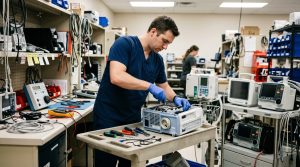
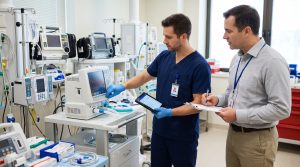

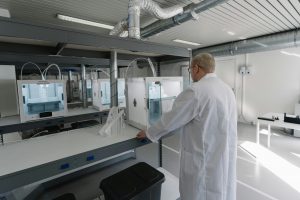
Medical equipment planning is the process of deciding which equipment a hospital needs, where it goes, how it is installed, and how it will be maintained over its life. It starts before purchase and covers needs, budget, space, installation, testing and service.
This guide explains the steps, who should be involved, what to budget, and which standards apply. It covers new construction and existing hospitals.
What Is Medical Equipment Planning
Medical equipment planning means deciding what biomedical devices you need, where they belong, how they are installed, and how they are supported over time. It covers the full lifecycle of equipment, from early selection to long-term service and replacement.
A structured approach to medical equipment planning allows you to align biomedical devices with clinical workflows before procurement begins. This reduces the risk of selecting equipment that does not match how care is delivered or how space is used within the hospital.
In hospitals, medical equipment planning goes beyond purchasing. You evaluate clinical demand, regulatory rules, space limits, and service needs. You also define how biomedical engineers handle inspections, testing, and repairs as part of ongoing biomedical equipment management, not as isolated tasks.
When biomedical equipment management is embedded into the planning phase, you gain better visibility into long-term service requirements, spare part availability, and staff workload. This improves coordination between clinical leadership, facilities, and biomedical teams.
These terms are often mixed up:
- Procurement is buying the device.
- Planning decides which device, in which room, with what power and space, and who will service it.
- A medical equipment management plan is the written document for inspecting, testing and maintaining equipment already in use. Planning comes first and feeds that plan.
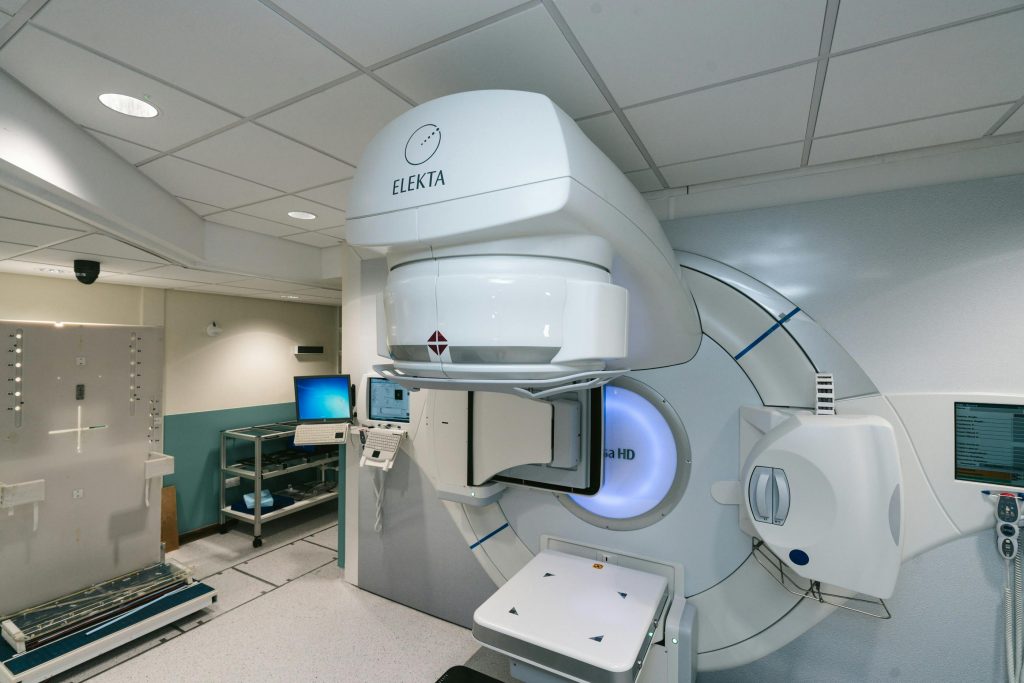
Why Is It Important to Plan Medical Equipment
Planning equipment early protects patient care and daily hospital operations. Poor planning often leads to delayed installations, unsafe layouts, and frequent device failures that affect clinical schedules.
Early medical equipment planning also supports better risk control. When biomedical engineers are involved from the start, potential safety concerns such as electrical load, infection exposure, or improper device placement are identified before equipment enters service.
Here is why equipment planning in hospital environments matters.
You reduce safety risks by selecting devices that meet current standards and fit the care setting.
You control costs by avoiding duplicate purchases and rushed replacements.
You support clinicians with reliable biomedical equipment that is ready when needed.
You reduce unplanned service calls related to biomedical equipment repair by setting maintenance expectations upfront.
What Are the Steps of Hospital Equipment Planning
A structured process helps hospitals manage technical and operational complexity. Each step builds on the previous one and keeps biomedical requirements visible.
Understanding Regulatory Standards
Start with compliance. Biomedical equipment must meet electrical safety, infection control, and data protection requirements set by regulators and accrediting bodies.
Regulatory requirements change over time, which makes early review essential. Medical equipment planning allows biomedical engineers to confirm that selected devices align with current standards and hospital policies before contracts are finalized.
The main requirements:
- The Joint Commission: Environment of Care standards cover how a hospital manages, inspects, tests and maintains equipment (EC.02.04.01 and EC.02.04.03).
- CMS Conditions of Participation: Equipment must be kept in a safe and acceptable condition (42 CFR 482.41).
- NFPA 99: Covers electrical and life-safety requirements.
- FDA: Device rules apply to devices and, in some cases, to servicing.
- HIPAA: Applies to devices that store or send patient data.
- State rules: Requirements vary by state.
Need help preparing? See our regulatory compliance consulting.
Choosing the Right Equipment
Select equipment based on clinical use and serviceability. Reliability, spare part access, and system compatibility matter more than brand preference.
During hospital equipment planning, reviewing service documentation and manufacturer support models helps you avoid equipment that requires excessive downtime or external service dependence. This evaluation is especially important for high-use biomedical devices.
During hospital equipment planning, many facilities rely on biomedical equipment consulting to evaluate options objectively, especially for high-risk or high-cost devices. This helps you avoid equipment that is difficult to maintain or train staff on.
Space Planning
Space directly affects safety and workflow. Biomedical equipment requires proper clearance, power capacity, ventilation, and service access.
Space planning within medical equipment planning helps you avoid situations where equipment is installed but cannot be safely serviced or accessed. Biomedical engineers often identify issues such as insufficient power outlets or restricted maintenance access during layout reviews.
Installation Planning
Installation involves coordination, not just delivery. Vendors, facilities teams, information technology staff, and biomedical engineers all play a role.
Installation planning within medical equipment planning ensures that testing, acceptance, and documentation occur before clinical use. This step protects patients and gives biomedical teams full visibility into device configuration and performance.
A clear medical equipment planning process defines installation steps, testing requirements, and acceptance criteria. Biomedical teams verify device performance before it enters clinical use.
A device should not go into use the day it arrives. Biomedical technicians should:
- Inspect it for damage and match it to the purchase order
- Run electrical safety and performance tests
- Record baseline results and settings
- Add it to the inventory and maintenance schedule
This record is the starting point for every later inspection and repair. TalentConnect can help you find contract or temporary biomedical talent for startup work.
Efficient Workflow Design
Equipment placement influences how clinicians move, respond, and treat patients. Poor placement slows care and increases error risk.
Efficient workflow design during hospital equipment planning supports faster response times and reduces unnecessary movement. Biomedical engineers contribute by confirming that equipment placement also allows safe servicing without disrupting care areas.
Regular Maintenance Plan
Every device needs a defined service schedule. Preventive maintenance reduces unexpected failures and extends equipment lifespan.
A regular maintenance plan created during medical equipment planning clarifies inspection frequency, test procedures, and escalation paths. This structure helps biomedical teams manage workloads and prioritize patient-facing equipment.
Sterilizer and autoclave repair and maintenance deserves special attention within any hospital maintenance plan. These systems play a direct role in infection prevention and must operate within strict performance limits. Regular inspections, calibration, and timely repairs reduce the risk of failed sterilization cycles and support compliance with safety standards. Involving biomedical engineers in ongoing service planning helps hospitals keep these systems reliable and ready for clinical use.
Planning for New Construction and Renovation
Large equipment decisions often happen during a building project. The equipment list must be ready early, because the drawings depend on it. Some devices need special support, shielding, water, medical gas or extra power. If those needs are found late, drawings change, and every change costs time and money.
Planning phases
- Programming: List departments and the care they provide. Draft the first equipment list.
- Design: Confirm device models. Send space, power, data and utility needs to the design team.
- Construction: Order long-lead items. Check that rough-in work matches the equipment.
- Commissioning: Receive, inspect, test and document devices.
- Go-live: Train staff and hand over to the biomedical team.
Biomedical engineers should join at the design phase, not at delivery.
Equipment groups
One way to sort equipment is into informal groups. The more a device is tied to the building, the earlier it must be planned.
| Group | What it means | Examples |
|---|---|---|
| Fixed to the building | Needs structure or hard utility connections | Ceiling-mounted surgical lights, large sterilizers, imaging systems |
| Movable with utility needs | Needs power, gas or data at its location | Anesthesia machines, ventilators, patient monitors |
| Mobile | No major building impact | Infusion pumps, stretchers, carts |
| Instruments, furniture, IT | Small tools, non-clinical items, connected systems | Surgical sets, beds, nurse call |
Many delays come from not knowing who owns a task. List every device and name who buys, delivers, installs and connects it. Share that list with the hospital team, contractor, vendors and biomedical team before orders go out.
What to Consider for Medical Equipment Planning
Good planning depends on accurate data and realistic expectations. These factors guide better decisions.
Hospital Needs and Current Inventory
Start by reviewing existing assets. Usage rates, failure history, and service records reveal what should be replaced, upgraded, or relocated.
A detailed inventory review supports medical equipment planning by identifying underused devices and areas of high demand. This helps hospitals allocate resources more effectively without unnecessary purchases.
Many hospitals begin medical equipment planning by creating a verified biomedical equipment list to ensure decisions are based on real inventory, not assumptions.
For each device, check age, how long the manufacturer will support it, repair history, and how much it is used. Replace a device when parts or support end, repair costs keep rising, it fails often, or it no longer meets current safety or software needs. An accurate inventory and asset record keeps these decisions based on facts.
Functionality and Efficiency
Choose equipment that supports clinical needs without adding complexity. Devices should be intuitive, durable, and compatible with existing systems.
Evaluating functionality during equipment planning in hospital settings helps you avoid equipment that requires excessive training or creates workflow bottlenecks. Biomedical engineers provide insight into real-world performance beyond technical specifications.
Biomedical engineers assess real-world performance during equipment planning in hospital settings, helping avoid equipment that looks suitable on paper but fails in practice.
Budgeting
Budgeting should reflect the full lifecycle of equipment. This includes installation, training, maintenance, and end-of-life planning.
Medical equipment planning improves budget accuracy by identifying long-term service costs early. This reduces financial strain caused by emergency replacements or unsupported devices later on.
The purchase price is only one part of the cost. A realistic budget covers:
- The device
- Installation and building work
- Training
- Service contract or in-house service
- Preventive maintenance and parts
- Supplies and accessories
- Removal and disposal (see our guide to disposal of medical equipment)
Decide early whether to buy or lease, and compare total cost over the life of the device, not only the first invoice.
Final Words
Hospitals that invest in structured medical equipment planning protect patient safety, manage costs, and support clinical teams more effectively. The process works best when biomedical engineers are involved from the beginning and remain engaged throughout the equipment lifecycle.
Strong medical equipment planning creates stability across clinical and technical operations. When equipment decisions are planned, documented, and supported, hospitals gain greater control over safety, service quality, and long-term performance.
By following clear hospital equipment planning steps, maintaining an accurate medical equipment management plan, and aligning technical decisions with clinical needs, you create a more reliable and predictable care environment. Planning biomedical equipment is not a one-time task. It is an ongoing responsibility that supports every service your hospital provides.
Need help planning, inspecting or supporting your equipment? Talk to our team about our biomedical consulting services, or hire biomedical talent for your next project.